by Michael Geist, Senior Vice President of Strategy, Innovation & Growth at SES Space & Defense
For government and defense organizations, resilient communications have always been critical to the success of the mission. Today, the requirement for robust, always-available connectivity is more pronounced and urgent than ever.
Modern military and defense operations today depend on the ability to access and share data to accelerate decision-making, track threats in real time, enhance situational awareness, and preserve command and control. Even in the most challenging and contested environments, warfighters in combat, strategic commanders at headquarters, and all defense and government personnel must be able to communicate and share critical intelligence at all times.
The link between reliable connectivity and mission success
The increased reliance on data, and the recognition of the vital role network capabilities play in driving mission success, has led to an insatiable demand for solutions that can support increasingly sophisticated operations without adding exorbitant costs or unnecessary complexity. It has also prompted adversaries to invest in capabilities that can disrupt, degrade, or disable traditional communications networks.
Traditionally, military and defense organizations have satisfied their needs for resilience using the PACE (Primary, Alternate, Contingency, Emergency) architecture, where multiple networks and communications options are accessible.
However, while PACE delivers a degree of redundancy, the approach has its drawbacks. PACE requires organizations to procure, maintain, and subsidize several disparate networks and resources, which can be an expensive proposition. When a primary communications system becomes unavailable, it can be left to the users in the field to navigate the switch from one network to another. This can be challenging in high-stress, combat environments, leading to human error.
A unified approach to mission connectivity
Mission success in today’s environment requires a seamless, unified connectivity solution that blends satellite connectivity from multiple orbits and utilizes the network best suited for the requirement and scenario at hand. This capability is precisely what SES Space & Defense is delivering to defense and military customers with its proprietary Simultaneous Integrated Multi-Orbit Networking solution, or SIMON.
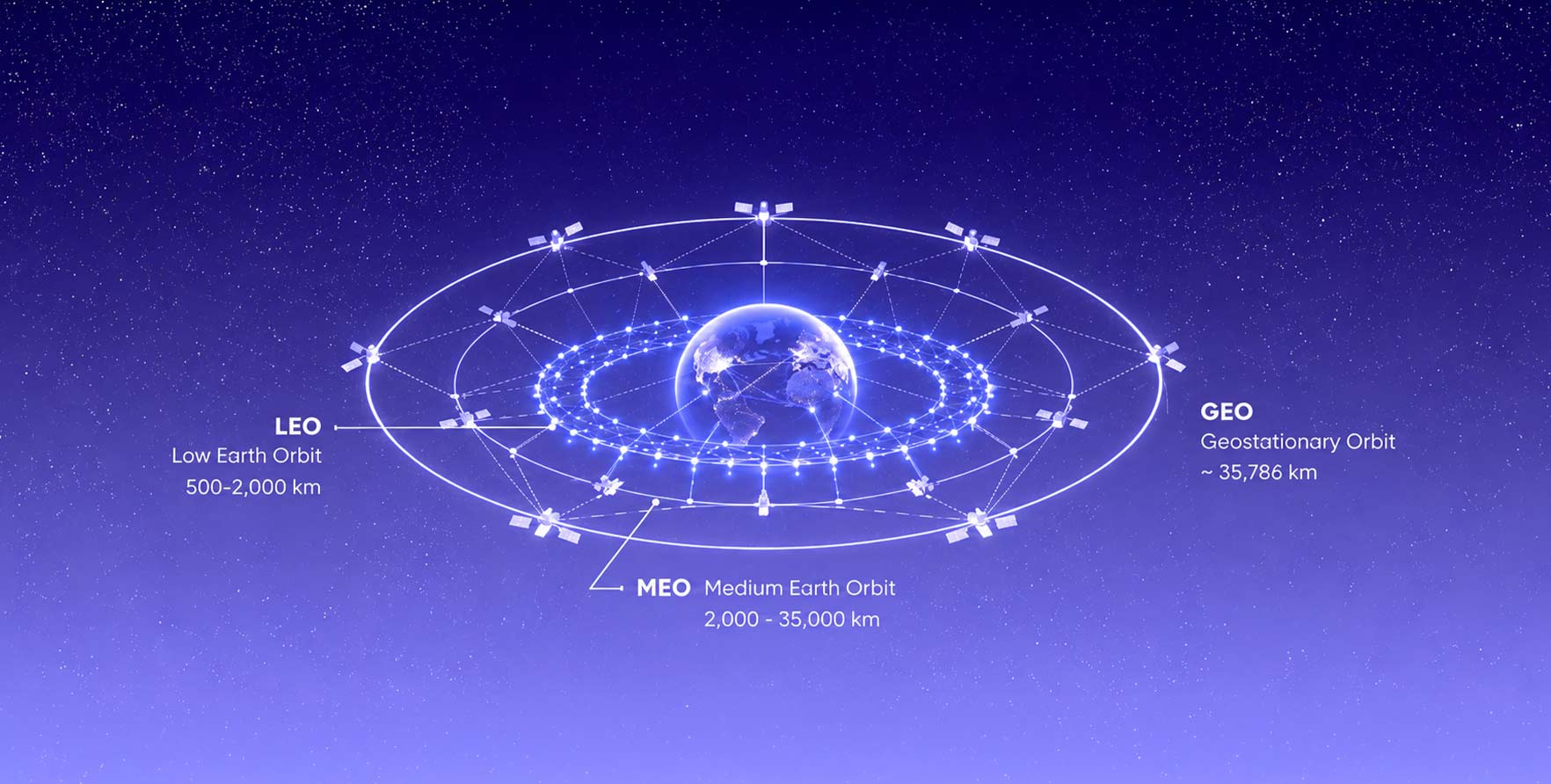
SIMON brings together independent communications paths from across low Earth, medium Earth, and geostationary satellite orbits. Rather than a failover solution that simply flips between networks or responds only when one option becomes unavailable, SIMON simultaneously uses multiple paths to route traffic, sustain communications, and ensure continuation of transmissions as mission conditions change and threats evolve. If one path is disrupted, SIMON ensures that government and defense users can continue to transmit mission-critical data with minimal complexity at all times and without requiring personnel in the field to manually switch between networks.
As an agile software platform independent of any underlying communications system, SIMON can sit behind individual or hybrid terminals, working across both legacy commercial and government networks. This flexibility allows users to extract greater value from the communications resources in which they have already invested, while also preserving the option to integrate additional equipment and technologies in the future.
Connecting all resources to maximize mission resilience
Government and defense organizations do not need another collection of isolated and expensive connectivity products. They need the resources they already have to work together in a way that makes their overall communications capability as resilient as possible in all conditions and environments.
By leveraging its extensive experience in MEO and GEO, and partnerships across LEO, SES Space & Defense’s SIMON solution ensures that government and defense users have the resilient connectivity to support successful mission outcomes wherever operations are happening around the world.